
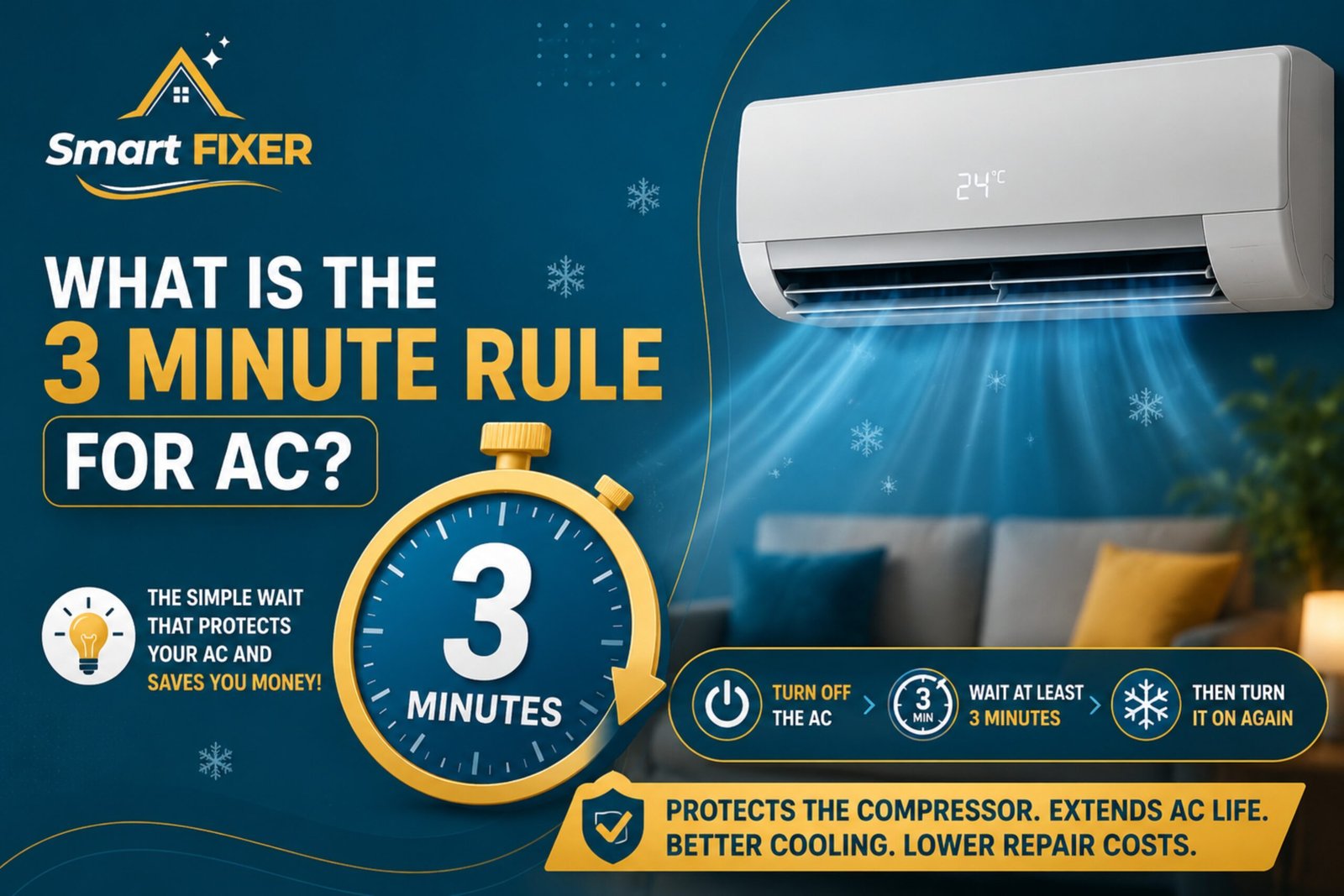
Air conditioners are designed with several protection features to improve performance and prevent internal damage. One of the most important yet commonly overlooked concepts is the 3 minute rule for AC. This simple waiting period helps protect the compressor and allows the cooling system to operate safely after the unit turns off.
Many people switch their AC off and immediately turn it back on when they feel the room is not cooling quickly enough. However, doing this repeatedly can put unnecessary stress on the system. Understanding this rule can help improve efficiency, reduce repair costs, and increase the life of your air conditioner.
Whether you use an AC at home or in an office, knowing how this small delay works can make a noticeable difference in long-term performance.
Understanding the 3 Minute Rule for AC
Many users often ask what is the 3 minute rule for AC and why manufacturers recommend waiting before restarting.
The 3-minute rule refers to the short delay between turning an air conditioner off and switching it back on again. During this time, internal pressure inside the compressor balances before the system starts another cooling cycle.
Modern air conditioners often include this delay automatically through built-in control systems. Older units may rely on users to follow this practice manually.
This delay is not meant to inconvenience users. Instead, it protects one of the most important and expensive parts of your AC system—the compressor.
Key reasons behind this rule include:
- Preventing compressor overload
- Balancing refrigerant pressure
- Reducing electrical stress
- Improving system reliability
- Supporting smoother cooling performance
Following this simple rule can significantly improve the overall operation of your air conditioner.
Why Air Conditioners Need Controlled Restart Timing?
Every air conditioner depends on pressure differences inside the refrigeration cycle to create cooling. When the unit shuts off, these pressures remain temporarily uneven.
Restarting too quickly can force the compressor to work against this pressure imbalance.
This may result in:
- Hard starting conditions
- Higher electricity consumption
- Reduced compressor lifespan
- Increased wear on electrical components
A controlled restart gives the system enough time to stabilize before beginning another cooling cycle.
Professional technicians often recommend allowing this brief pause even if the system appears ready to start immediately.
How Does the 3 Minute Rule Work in AC Systems?
To understand how the 3 minute rule work in AC, it helps to know what happens inside the cooling process.
When your air conditioner stops running, refrigerant pressure remains trapped in different parts of the system. The compressor requires balanced pressure to restart efficiently.
The waiting period allows:
- Refrigerant movement to stabilize
- Compressor load to reduce
- Electrical systems to reset
- Cooling cycles to begin normally
Without this short pause, the compressor may struggle to start and draw more current than necessary.
Most modern systems manage this automatically through timers or smart control boards.
At Smart Fixer, service professionals often explain that following operating guidelines can prevent avoidable system stress and improve long-term performance.
Common Reasons Behind Air Conditioner 3 Minute Delay
Many users notice a short pause before cooling starts and assume something is wrong. In reality, the air conditioner 3 minute delay is usually an intentional protection feature.
The delay commonly happens after:
- Power interruptions
- Thermostat adjustments
- Manual restart attempts
- Temperature setting changes
- Automatic compressor cycling
This feature exists because compressors are expensive components and require controlled operating conditions.
If your unit delays startup briefly and then begins cooling normally, that is usually expected behavior.
However, if delays continue for unusually long periods, professional inspection may be useful.
Signs Your AC System May Need Professional Inspection
Although restart delays are normal, certain symptoms could indicate underlying issues.
Watch for these warning signs:
- AC fails to restart after several minutes
- Strange clicking sounds
- Frequent breaker trips
- Weak airflow
- Cooling inconsistencies
- Unusual compressor noises
These issues may not always relate directly to restart timing but should not be ignored.
Routine inspection helps identify small problems before they become expensive repairs.
Estimated AC Service and Repair Cost Comparison
Understanding maintenance costs helps homeowners make better decisions before small issues become major repairs. Comparing service options also helps identify the value of preventive maintenance over emergency repairs. Choosing the Best ac service in JVC Jumeirah Village Circle can support better cooling performance, reduce unexpected breakdown expenses, and improve long-term system efficiency. Regular servicing often costs less than major repairs and helps maintain comfortable indoor conditions throughout the year.
| Service Type | Estimated Cost Range |
| General AC Inspection | ₹500 – ₹1,500 |
| Filter Cleaning | ₹300 – ₹800 |
| Gas Refilling | ₹2,000 – ₹6,000 |
| Capacitor Replacement | ₹1,000 – ₹3,000 |
| Compressor Repair | ₹5,000 – ₹15,000 |
| Compressor Replacement | ₹10,000 – ₹30,000+ |
Costs vary depending on AC type, location, and service requirements.
Preventive care is often more affordable than emergency repairs.
Understanding the Importance of AC Compressor Protection Rule
One of the main reasons for delayed restarting is the AC compressor protection rule used in modern cooling systems.
The compressor acts as the heart of the air conditioner. It compresses refrigerant and keeps the cooling cycle functioning properly.
When users repeatedly switch the unit on and off quickly, compressor stress increases.
Protection systems help by:
- Delaying unsafe restart cycles
- Lowering startup pressure
- Avoiding overheating
- Supporting component durability
Ignoring these operating principles can eventually affect cooling efficiency.
Why Wait 3 Minutes Before Restarting AC Units?
Many homeowners still wonder why wait 3 minutes before restarting AC instead of turning it back on immediately.
The answer is simple: pressure stabilization.
After shutdown, refrigerant pressure inside the system remains uneven. Immediate restart forces the compressor to operate under difficult conditions.
Waiting briefly helps:
- Improve startup efficiency
- Prevent internal strain
- Lower electricity spikes
- Extend system lifespan
This small habit can contribute to better performance over time.
AC Restart Delay Explained for Everyday Users
For people unfamiliar with air conditioning systems, understanding technical behavior can feel confusing. This is where AC restart delay explained in simple terms becomes helpful.
Think of your AC like a vehicle engine.
If you stop and instantly restart repeatedly, mechanical parts receive more stress than during normal operation.
Your air conditioner works similarly.
The restart delay gives internal components time to prepare for the next cooling cycle instead of forcing immediate operation.
This built-in pause is designed for protection—not because the AC is malfunctioning.
Simple AC Cooling System Maintenance Tips to Follow
Good operating habits combined with AC cooling system maintenance can improve efficiency and reduce repair frequency.
Useful maintenance practices include:
- Clean air filters regularly
- Keep outdoor units dust-free
- Schedule annual servicing
- Avoid rapid thermostat changes
- Maintain proper room insulation
- Follow manufacturer recommendations
These habits support stable cooling and better energy usage.
Preventive maintenance is one of the easiest ways to avoid unnecessary breakdowns.
At Smart Fixer, regular servicing recommendations often focus on improving efficiency while reducing long-term operating costs.
How Smart AC Usage Improves Long Term Performance?
Air conditioners perform best when operated consistently rather than aggressively.
Frequent on-off cycles, extreme temperature settings, and ignored maintenance schedules can reduce efficiency over time.
Healthy usage habits include:
- Maintaining moderate temperature settings
- Allowing restart delays naturally
- Keeping airflow unobstructed
- Servicing components periodically
These small changes often create noticeable improvements in comfort and performance.
Conclusion
The 3-minute AC rule may seem like a small operating detail, but it plays an important role in protecting your cooling system. Giving your air conditioner a short pause before restarting helps reduce compressor stress, improves efficiency, and supports longer equipment life.
Understanding how restart delays work can help homeowners avoid unnecessary repairs and maintain consistent cooling performance. Following simple maintenance habits and operating your system correctly can keep your AC running effectively for years. For reliable guidance and better AC care practices, Smart Fixer encourages preventive maintenance and informed usage.
Frequently Asked Questions
1. Is the 3-minute rule necessary for all AC units?
Most modern air conditioners either recommend or automatically apply this delay to protect the compressor.
2. Can restarting AC immediately damage the compressor?
Repeated immediate restarts may increase compressor strain and reduce efficiency over time.
3. Why does my AC wait before turning back on?
Many units include a built-in protection timer that delays startup briefly.
4. Does the delay increase electricity usage?
No, controlled restarting usually supports more efficient operation.
5. What happens if my AC does not restart after 3 minutes?
If delays continue unusually long, inspection may be required.
6. How often should AC maintenance be done?
General AC servicing once or twice a year is recommended for better cooling and efficient performance. Regular AC cleaning service JVC Jumeirah Village Circle can also help improve airflow, maintain indoor air quality, and support long-term AC efficiency.