
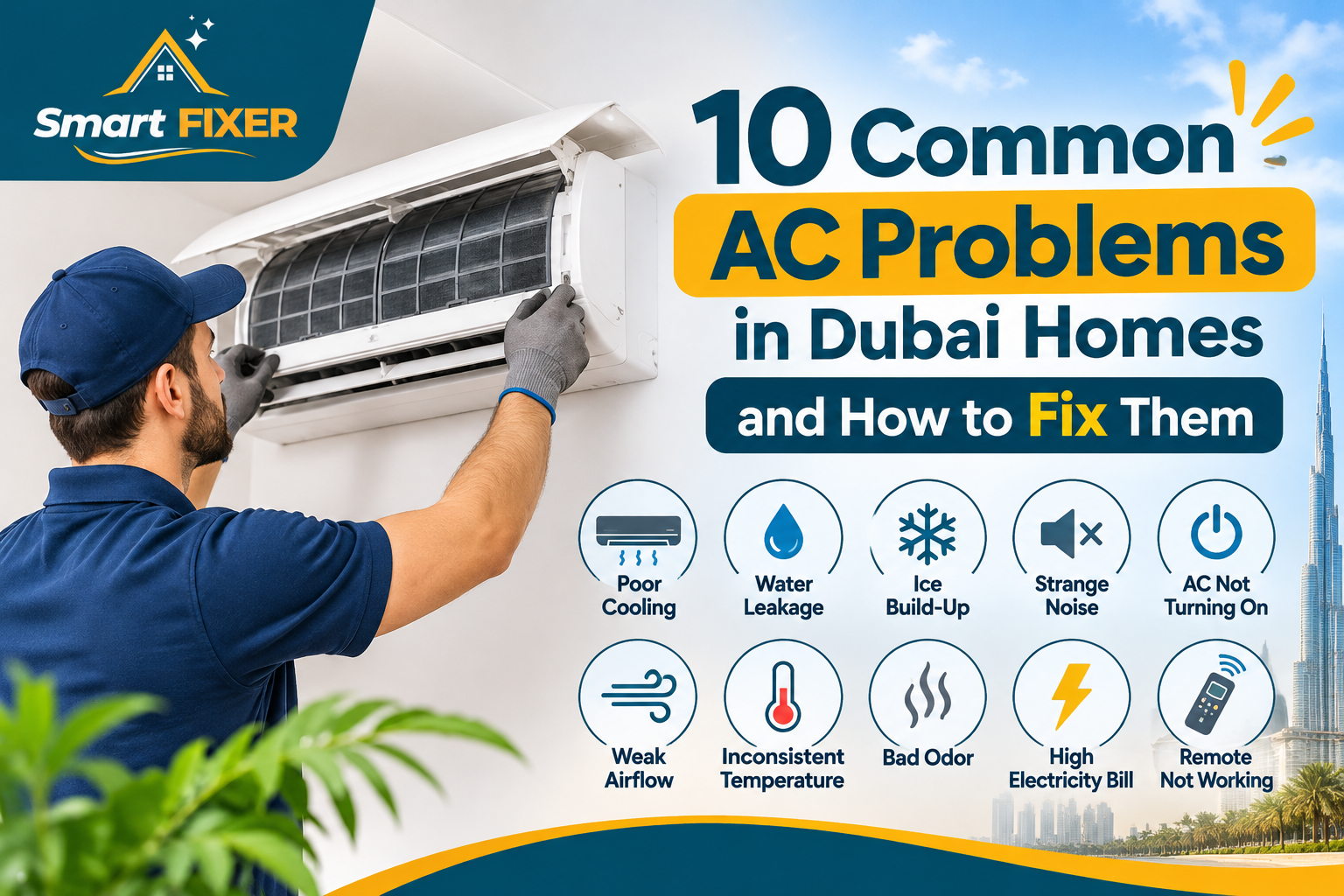
Dubai’s hot weather puts air conditioning systems under considerable pressure, especially during the long summer months. Understanding common AC Problems in Dubai Homes can help residents identify early warning signs, avoid unnecessary breakdowns and maintain comfortable indoor temperatures. From weak cooling and water leakage to unusual noises and unpleasant smells, many AC issues begin with small problems that become more expensive when ignored.
Some issues can be resolved through basic maintenance, such as cleaning accessible filters. Others require a qualified technician to inspect electrical components, refrigerant levels or the drainage system. Knowing the difference can help you protect your AC unit and decide when professional repair is necessary.
10 Common AC Problems in Dubai Homes
Dubai’s desert climate brings intense summer heat and high humidity, while airborne dust can collect on AC filters and outdoor components. These conditions make regular cleaning and timely servicing especially important.
1. AC Is Running but Not Cooling Properly
One of the most common complaints is an AC that runs continuously but does not cool the room sufficiently. You may notice warm air coming from the vents or that the indoor temperature takes too long to decrease.
Possible causes:
- Dirty or clogged air filters
- Low refrigerant caused by a leak
- Dirty evaporator or condenser coils
- Incorrect thermostat settings
- Blocked air inlets or outlets
How to fix it: Start by checking the thermostat and selecting the cooling mode. Make sure doors and windows are closed and that furniture is not blocking the vents. Clean the accessible filters according to the manufacturer’s instructions.
If cooling remains weak, arrange a professional inspection. A technician can check refrigerant levels, coils and other components. Simply adding refrigerant without identifying a possible leak is not a proper long-term repair.
2. Water Leaking From the Indoor AC Unit
Water dripping from an indoor AC unit can damage walls, ceilings, furniture and flooring. It may also create damp patches and encourage mould growth if the moisture is not addressed.
Possible causes:
- Blocked condensate drain line
- Dirty air filters
- Damaged or overflowing drain pan
- Incorrect drain pipe installation
- Frozen evaporator coil
How to fix it: Switch off the AC if water is actively leaking. Keep electrical appliances and belongings away from the affected area. Avoid opening internal components or attempting to clear inaccessible pipes yourself.
A qualified technician can inspect the drain line, clean the drainage system, and check the drain pan. If the leak is caused by a frozen coil, the underlying airflow or refrigerant issue must also be identified.
3. Weak Airflow From AC Vents
Sometimes an AC produces cold air, but the airflow feels too weak to cool the entire room. This can make some areas comfortable while others remain warm.
Possible causes:
- Dust-covered air filters
- Blocked supply or return vents
- Dirty blower fan
- Duct leakage or obstruction
- Fan motor problems
How to fix it: Check whether curtains, furniture or other objects are covering the vents. Clean or replace the filters as recommended by the manufacturer.
If airflow does not improve, professional duct and blower inspection may be necessary. Cleaning the filters alone will not solve problems caused by damaged ducts or faulty fan components.
4. AC Produces Unpleasant or Musty Smells
A musty smell when switching on the AC may indicate moisture or microbial growth around the filter, drain pan or evaporator coil. Other smells may come from dust, accumulated dirt or materials inside the system.
Possible causes:
- Moisture inside the indoor unit
- Dirty filters and evaporator coils
- Standing water in the drain tray
- Accumulated dust and debris
- Electrical overheating or damaged wiring
How to fix it: Clean accessible filters and keep the surrounding area dry. If the smell continues, arrange professional cleaning and inspection.
Never ignore a burning or electrical smell. Turn off the unit and arrange an urgent inspection rather than continuing to operate it.
5. AC Makes Loud or Unusual Noises
An AC system normally produces some operating sound. However, sudden rattling, grinding, buzzing or banging noises may indicate a mechanical or electrical problem.
Possible causes:
- Loose screws or panels
- Fan blades touching an obstruction
- Worn motor bearings
- Damaged fan components
- Electrical faults
How to fix it: Turn off the system if you hear loud grinding, repeated banging or unusual electrical buzzing. Do not try to reach inside the unit while it is connected to power.
A technician can inspect the fan, motor, mounting brackets and electrical connections. Addressing unusual sounds early may prevent further component damage.
6. AC Switches On and Off Frequently
Frequent starting and stopping is known as short cycling. It can affect cooling performance, increase electricity consumption and put additional stress on the compressor.
Possible causes:
- Incorrect thermostat placement or settings
- Dirty air filters
- Refrigerant problems
- Oversized AC equipment
- Electrical or control board faults
How to fix it: Check that the thermostat is set correctly and that the air filter is clean. Keep heat-producing appliances away from the thermostat if they affect its temperature reading.
If the system continues to switch on and off repeatedly, arrange a professional diagnosis. The technician may need to inspect the refrigerant circuit, electrical controls and cooling capacity.
7. AC Remote or Thermostat Is Not Responding
An unresponsive remote or thermostat can prevent the AC from starting, changing modes or maintaining the selected temperature.
Possible causes:
- Weak or dead remote batteries
- Incorrect operating mode
- Faulty remote control
- Thermostat sensor problems
- Loose wiring or control board issues
How to fix it: Replace the remote batteries and check that the display is working. Make sure the AC is set to cooling mode and that the temperature setting is appropriate.
If the controls remain unresponsive, a technician can test the thermostat, receiver and electrical connections.
8. AC Circuit Breaker Keeps Tripping
A circuit breaker that trips repeatedly should never be treated as a minor inconvenience. It may indicate an electrical fault or excessive current draw.
Possible causes:
- Damaged wiring
- Faulty capacitor or compressor
- Electrical short circuit
- Overloaded circuit
- Moisture affecting electrical components
How to fix it: Switch off the AC and contact a qualified electrical or HVAC technician. Do not repeatedly reset the breaker, bypass safety devices or attempt electrical repairs yourself.
The technician should identify the cause before restoring normal operation. Repeated tripping can indicate a safety risk that needs prompt attention.
9. Ice Forms on the AC Indoor Unit or Pipes
Ice on an evaporator coil or refrigerant pipe may seem unusual in a hot city like Dubai, but it can happen when the system does not receive sufficient airflow or has a refrigerant-related problem.
Possible causes:
- Dirty or blocked filters
- Restricted airflow
- Faulty blower fan
- Low refrigerant due to leakage
- Problems with the expansion device
How to fix it: Turn off the cooling function and arrange an inspection. Do not scrape the ice or use sharp objects to remove it. Allow a technician to assess the system and identify the cause.
Simply restarting the AC without addressing the underlying fault may cause the ice to return.
10. Outdoor AC Unit Overheats or Runs Poorly
The outdoor unit releases heat removed from inside the home. If it cannot release that heat properly, the system may struggle to cool the property.
Possible causes:
- Dust and debris on condenser coils
- Restricted airflow around the unit
- Faulty condenser fan
- Damaged electrical components
- Refrigerant or compressor problems
How to fix it: Keep the area around the outdoor unit clear of stored items and other obstructions. Avoid covering the unit in a way that restricts ventilation.
Professional coil cleaning and inspection may be needed to restore proper heat transfer. Do not open the outdoor unit or handle its electrical components yourself.
Quick Guide to AC Problems and Their Solutions
| AC problem | Common reason | Recommended action |
|---|---|---|
| Poor cooling | Dirty filters or refrigerant leak | Clean filters; book an inspection |
| Water leakage | Blocked drain line | Switch off and arrange drain cleaning |
| Weak airflow | Blocked vents or dirty blower | Check vents and filters |
| Bad smell | Moisture or dirt buildup | Clean filters and inspect the unit |
| Loud noise | Loose or damaged components | Stop operation if noise is severe |
| Frequent cycling | Thermostat or system fault | Check settings and book a diagnosis |
| Remote not working | Weak batteries or control fault | Replace batteries and test controls |
| Breaker tripping | Electrical fault or overload | Switch off and call a technician |
| Ice formation | Restricted airflow or low refrigerant | Stop cooling and arrange inspection |
| Outdoor unit overheating | Dirty coils or restricted airflow | Clear obstructions and book servicing |
How to Prevent AC Problems in Dubai Homes?
Regular maintenance is one of the most effective ways to reduce unexpected breakdowns. A few simple habits can help keep your cooling system in better condition.
- Clean air filters regularly: Dust accumulates quickly in frequently used systems. Follow the manufacturer’s cleaning schedule and inspect filters more often during heavy use.
- Schedule professional servicing: Have coils, drain lines, electrical connections and other important components inspected periodically.
- Keep vents unobstructed: Avoid placing furniture, curtains or decorative items in front of air outlets and return vents.
- Check the outdoor unit: Keep surrounding areas clear so the system can release heat effectively.
- Use sensible thermostat settings: DEWA recommends setting the thermostat at 24°C or higher to help reduce cooling consumption.
- Address small faults early: Unusual smells, water leaks and changes in airflow should be checked before they develop into larger problems.
When Should You Call a Professional AC Technician?
Basic checks such as changing remote batteries, adjusting thermostat settings and cleaning accessible filters are generally manageable for homeowners. However, refrigerant handling, electrical repairs, compressor faults and internal component cleaning require appropriate technical skills.
Contact a professional if your AC repeatedly stops working, fails to cool, leaks water, trips the circuit breaker or makes unusual noises. If you notice burning smells or signs of electrical damage, switch off the system and seek urgent assistance.
Choose a service provider that offers qualified technicians, clear pricing and a proper explanation of the repair required.
Get Reliable AC Repair Services in Dubai
A properly functioning AC is essential for everyday comfort in Dubai. Ignoring early warning signs can lead to higher repair costs, reduced cooling efficiency and unexpected breakdowns during the hottest months.
Smart Fixer provides home maintenance and repair services in Dubai, supported by licensed and certified technicians, a fully insured team, transparent pricing and same-day service availability. With 11+ years of service experience, 500+ customers served and 24/7 emergency support, the team helps residents address their home maintenance needs.
If your AC is not cooling properly, leaking water or making unusual noises, contact Smart Fixer today to arrange a professional inspection and get your home cooling system back on track.
Frequently Asked Questions
1. Why does my AC take so long to cool my home in Dubai?
High outdoor temperatures, dirty filters, blocked vents, poor insulation and refrigerant problems can all affect cooling performance. If basic checks do not improve the temperature, arrange a professional inspection.
2. How often should AC filters be cleaned in Dubai?
Filter cleaning frequency depends on the AC model, usage and indoor dust levels. During periods of heavy use, inspect filters regularly and follow the manufacturer’s instructions. Some manufacturers recommend cleaning every two weeks, while DEWA advises periodic cleaning at least monthly during summer.
3. Is water dripping from an AC unit normal?
Water should normally leave the system through its condensate drainage pipe. Water dripping from the indoor unit is generally a sign of a drainage, filter or condensation problem and should be inspected.
4. Why does my AC keep tripping the circuit breaker?
Repeated breaker trips may result from faulty wiring, a damaged compressor, a defective capacitor or an overloaded electrical circuit. Switch off the AC and have a qualified technician identify the cause instead of repeatedly resetting the breaker.
5. Can regular AC servicing reduce electricity consumption?
Yes. Cleaning filters, maintaining coils, checking airflow and addressing faulty components can help an AC operate more efficiently. Regular servicing can also identify developing problems before they cause major breakdowns.