
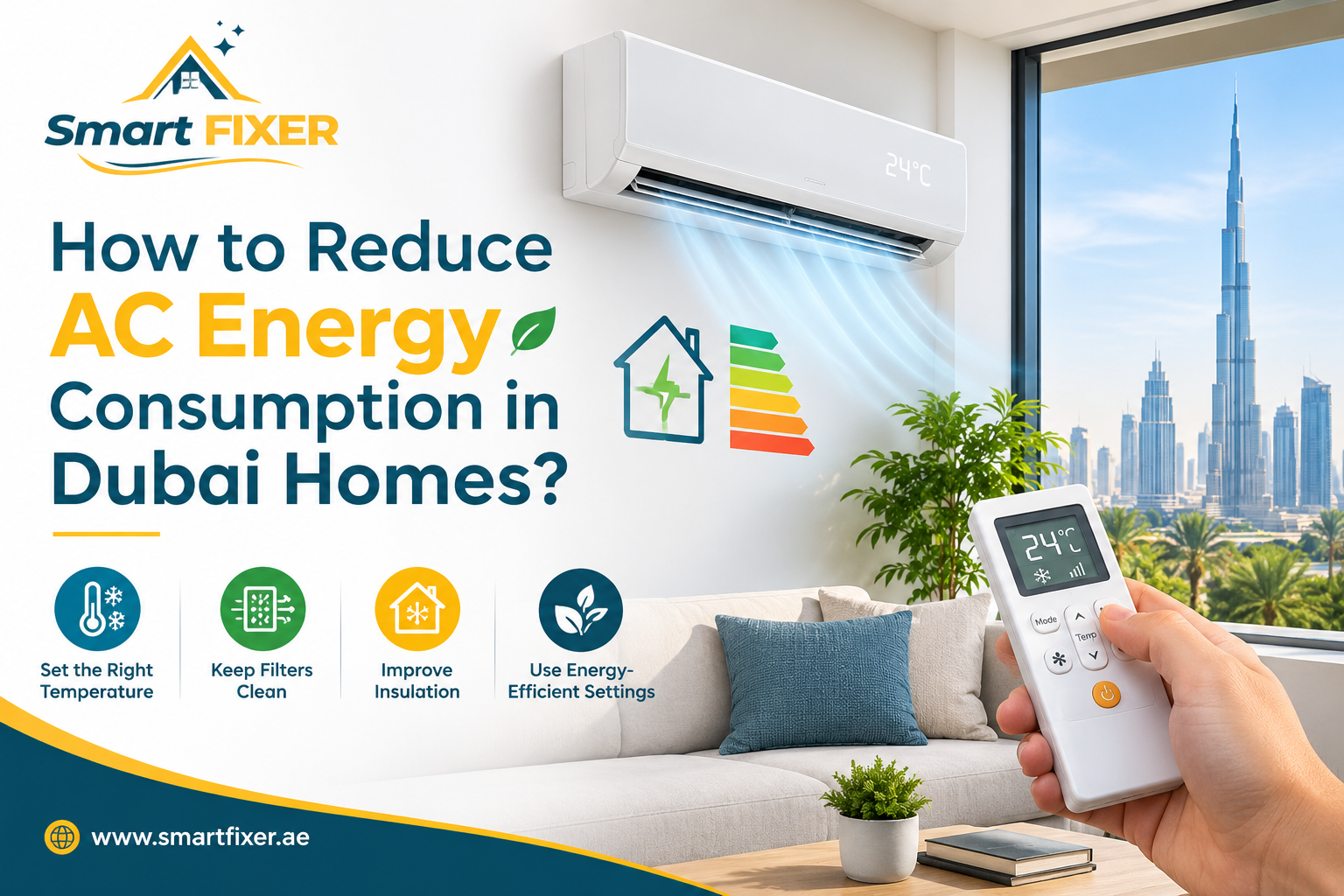
Air conditioning is an essential part of everyday life in Dubai, especially during the hotter months. However, continuous cooling can significantly increase household electricity consumption. Learning how to reduce AC energy consumption in Dubai homes can help you maintain a comfortable indoor temperature while controlling monthly electricity costs. The good news is that many energy-saving improvements are simple, practical, and easy to maintain.
From choosing the right thermostat setting to cleaning filters and improving insulation, small changes can make a noticeable difference. Regular AC maintenance is equally important because an inefficient system may consume more electricity while providing less effective cooling.
Why Does AC Use So Much Energy in Dubai Homes?
Dubai experiences long periods of hot weather, which means air conditioners often operate for several hours each day. During particularly hot periods, the AC may need to work harder to maintain the desired indoor temperature.
Heat can also enter a property through windows, doors, walls, and poorly insulated areas. When this happens, the air conditioner needs to run for longer to compensate for the additional heat.
Other factors can also increase AC energy consumption, including:
- Dirty or blocked air filters
- Incorrect thermostat settings
- Refrigerant-related issues
- Poor insulation
- Leaking ducts
- Oversized or undersized AC units
- Poor airflow
- Lack of regular servicing
- Leaving doors and windows open while cooling
Understanding these factors makes it easier to identify where energy is being wasted.
Set Your Thermostat at an Efficient Temperature
One of the simplest ways to reduce AC energy consumption is to avoid setting the thermostat unnecessarily low.
Many homeowners assume that setting the AC to a very low temperature will cool the room faster. However, this can make the system run for longer without providing a proportional improvement in comfort.
A moderate indoor temperature can provide a balance between comfort and energy efficiency. When appropriate for your household, gradually adjusting the thermostat by a few degrees can reduce the cooling load.
Avoid Constantly Changing the Temperature
Frequent thermostat adjustments can make it harder for the system to maintain stable conditions.
Instead, choose a comfortable setting and allow the AC to maintain it. If your home has a programmable or smart thermostat, use scheduling features to reduce cooling when rooms are unoccupied.
Clean AC Filters Regularly for Better Airflow
Air filters collect dust and airborne particles over time. When a filter becomes clogged, air has greater difficulty passing through the system.
The AC may then need to work harder to circulate cooled air throughout the room. This can increase electricity consumption and may also affect indoor comfort.
Check your filters regularly and clean or replace them according to the manufacturer’s recommendations. Homes with more dust, pets, or frequent AC use may require more frequent attention.
A clean filter can support:
- Better airflow
- More consistent cooling
- Lower strain on the AC
- Improved indoor air quality
- More efficient operation
If cleaning the filter does not resolve poor airflow, the problem may be related to the indoor unit, ductwork, blower, or another component.
Keep Doors and Windows Closed While Cooling
An air conditioner has to work harder when hot outdoor air continuously enters a cooled room.
Keep doors and windows closed while the AC is operating. Check for gaps around doors and windows that may allow cooled air to escape.
This is particularly important in rooms exposed to direct sunlight or strong outdoor heat.
Simple measures such as using curtains, blinds, or shades during the hottest part of the day can also reduce heat entering through windows.
Improve Insulation to Keep Cool Air Inside
Good insulation helps slow the transfer of heat between your home and the outdoor environment.
If a property has insufficient insulation, the indoor space can gain heat more quickly. Your AC may then need to operate for longer periods to maintain the selected temperature.
Pay attention to areas such as:
- Windows and doors
- Roof and ceiling
- External walls
- Ductwork
- Gaps and cracks around openings
Improving insulation can be particularly useful for villas and properties with large windows or rooms exposed to direct sunlight.
Use Curtains and Blinds During Peak Heat
Sunlight entering through windows can noticeably increase indoor heat. This can create an additional cooling load for your AC.
Close curtains, blinds, or shades during the hottest hours, particularly on windows receiving direct sunlight.
For greater efficiency, consider window coverings designed to reduce heat transfer. This can help keep rooms cooler and reduce the amount of work required from the air conditioner.
Schedule Regular AC Maintenance in Dubai
Regular maintenance is one of the most important steps for keeping an AC system efficient.
An air conditioner can gradually lose efficiency because of dust accumulation, restricted airflow, worn components, drainage problems, electrical issues, or other faults.
Professional servicing can help identify these issues before they become larger problems.
A typical AC maintenance check may include inspection of:
| AC Component | Why It Matters |
|---|---|
| Air filters | Supports proper airflow |
| Indoor coil | Helps maintain efficient cooling |
| Outdoor unit | Allows heat to dissipate effectively |
| Fan and blower | Supports air circulation |
| Drain system | Helps prevent water-related issues |
| Electrical connections | Supports safe operation |
| Refrigerant system | Helps maintain cooling performance |
| Thermostat | Helps maintain the selected temperature |
Maintenance requirements vary by system, property, and usage. If your AC is running continuously but the rooms are still not cooling properly, professional inspection is worthwhile.
Check for Refrigerant and Cooling Problems
An AC that struggles to cool a room may have an underlying technical issue. Refrigerant-related problems are one possible cause, although they are not the only explanation.
If you notice that your AC is running for long periods without reaching the desired temperature, check for other warning signs such as:
- Weak cooling
- Unusual noises
- Ice formation
- Warm air from vents
- Repeated cycling
- Unexplained increases in electricity consumption
Do not attempt refrigerant-related work yourself. A qualified AC technician can inspect the system, identify the cause, and recommend the appropriate repair.
Keep the Outdoor AC Unit Clear
The outdoor unit needs adequate airflow to release the heat removed from your home.
Dust, debris, obstructions, or insufficient clearance around the unit can affect its performance. Make sure the surrounding area remains reasonably clear and that nothing blocks the airflow.
For safety and proper servicing, deeper cleaning or technical inspection should be handled by a trained professional.
Use Ceiling Fans Along With Your AC
Ceiling fans do not replace air conditioning, but they can improve how comfortable a room feels by circulating air.
When used appropriately, a fan can help distribute cool air more evenly. This may allow you to use a slightly higher thermostat setting while maintaining a comfortable environment.
Remember that fans cool people rather than the room itself. Turn them off when the room is unoccupied to avoid unnecessary electricity use.
Avoid Cooling Empty Rooms for Hours
Cooling an unoccupied room wastes energy.
If certain rooms are rarely used, avoid running the AC unnecessarily. Where your system allows independent temperature control, adjust cooling according to occupancy.
Smart thermostats and programmable controls can make this easier by allowing you to schedule cooling around your daily routine.
For example, you can reduce cooling while everyone is away and return to a comfortable setting before the household becomes occupied again.
Replace an Inefficient AC When Needed
Maintenance can improve performance, but an older or inefficient AC may eventually become expensive to operate.
If your system requires frequent repairs, struggles to cool the property, produces unusual noises, or causes consistently high electricity consumption, it may be worth discussing replacement options with a qualified technician.
Do not replace an AC solely because it is old. Consider its condition, efficiency, repair history, cooling capacity, and expected operating costs.
A professional assessment can help determine whether repair, maintenance, or replacement is more appropriate.
Simple Habits Can Lower Your AC Energy Use
Reducing AC consumption does not require changing everything at once. Start with the easiest improvements and build better cooling habits over time.
| Energy-Saving Action | Potential Benefit |
|---|---|
| Clean filters regularly | Improves airflow |
| Use moderate thermostat settings | Reduces unnecessary cooling |
| Close doors and windows | Limits heat entering the room |
| Use curtains during strong sunlight | Reduces indoor heat gain |
| Maintain the outdoor unit | Supports efficient heat release |
| Schedule professional servicing | Helps identify performance issues |
| Use fans strategically | Improves air circulation |
| Avoid cooling unused rooms | Prevents unnecessary operation |
| Check insulation and air leaks | Helps retain conditioned air |
| Consider efficient replacement when needed | May improve long-term efficiency |
The actual energy savings depend on your AC system, property size, insulation, occupancy, thermostat settings, outdoor conditions, and maintenance condition.
When Should You Call an AC Professional?
Some energy-efficiency issues can be addressed through everyday habits, but persistent problems require professional attention.
Contact an AC technician if your system:
- Runs continuously without cooling effectively
- Produces unusual sounds or smells
- Has weak airflow
- Shows signs of water leakage
- Develops ice on components
- Requires frequent repairs
- Causes unusual changes in electricity consumption
- Fails to maintain the selected temperature
Ignoring these signs can allow a small maintenance issue to develop into a more expensive repair.
Smart Fixer Can Help Maintain Efficient AC
Keeping your AC properly maintained is an important part of reducing unnecessary energy consumption in Dubai homes. Smart Fixer provides professional home maintenance support for residents who need reliable assistance with AC-related problems and other household maintenance requirements.
With 11+ years of experience, 500+ jobs completed, 24/7 emergency support, and a 4.9 customer rating, the team can help homeowners address AC issues before they affect comfort and everyday routines.
Regular inspection and timely repairs can help your cooling system operate more effectively while reducing the risk of unexpected breakdowns.
Make Your Dubai Home More Energy Efficient
The best way to reduce AC energy consumption is to combine efficient cooling habits with proper maintenance. Keep filters clean, control heat entering the property, use sensible thermostat settings, avoid cooling empty rooms, and arrange professional servicing when needed.
If your AC is consuming more electricity than expected or struggling to cool your home, do not simply keep lowering the thermostat. The system may need cleaning, repair, adjustment, or a professional inspection.
For dependable AC and home maintenance support in Dubai, Smart Fixer is ready to help. Get in touch today to schedule a service and keep your home comfortable throughout the year.
Frequently Asked Questions
1. What temperature should I set my AC in Dubai?
A comfortable moderate setting is generally more energy-efficient than using an unnecessarily low temperature. The ideal setting depends on personal comfort, humidity, occupancy, and the property’s insulation. Avoid repeatedly changing the thermostat and choose a setting that provides comfortable cooling without excessive operation.
2. How often should I clean my AC filter?
The appropriate cleaning frequency depends on AC usage, indoor dust levels, pets, and the manufacturer’s recommendations. In Dubai homes where AC systems operate frequently, filters should be checked regularly. A visibly dirty or clogged filter should be cleaned or replaced as recommended.
3. Why is my AC running constantly but not cooling properly?
Continuous operation can be caused by several issues, including dirty filters, restricted airflow, insulation problems, thermostat issues, refrigerant-related faults, or an incorrectly sized system. A professional inspection can identify the actual cause instead of relying on thermostat adjustments alone.
4. Does AC maintenance reduce electricity consumption?
Proper maintenance can help an AC operate more efficiently by addressing issues such as restricted airflow, dirty components, or other performance problems. However, the actual energy savings depend on the system’s condition, usage, property characteristics, and the type of maintenance performed.
5. Can ceiling fans help reduce AC energy use?
Ceiling fans can improve air circulation and make occupants feel more comfortable, potentially allowing a slightly higher AC setting. However, fans do not actually lower the room temperature. They should be switched off when rooms are unoccupied to avoid unnecessary electricity consumption.